
How are rounded corners made on leather book covers during production
How Are Rounded Corners Made on Leather Book Covers During Production? Professional Book Binding Guide for Publishers
Professional book binding is crucial for the quality and aesthetics of leather-covered books, and rounded corners on leather covers are a key detail that affects both appearance and practicality. Most publishers and bulk book procurement buyers face common pain points: uneven rounded corners, leather fraying at corners, inconsistent corner radius, and poor durability after production—these issues directly reduce the grade of finished books, increase rework rates, and affect brand reputation. This article focuses on the core demand of B-end printing purchasers, detailedly explains how rounded corners are made on leather book covers during production, provides material classification, technical parameters, application scenarios, and standardized operation steps, cites authoritative industry data, solves practical production pain points, enhances website EEAT, and guides high-intent clients to consult and place orders.
Table of Contents
- 1. What Is Book Binding and Leather Book Cover Rounded Corner Production?
- 2. Classification of Rounded Corner Tools & Matching Leather Cover Materials
- 3. Core Production Parameters & Quality Test Data (Authoritative Source)
- 4. High-Matching Application Scenarios of Rounded Corners for Leather Book Covers
- 5. Standard Production Steps for Leather Book Cover Rounded Corners
- 6. Core FAQ About Leather Book Cover Rounded Corner Production
- 7. Professional Summary & Official Consultation Channel
- 8. Shenzhen Artisan Global Co., Ltd.
1. What Is Book Binding and Leather Book Cover Rounded Corner Production?
Book binding is the entire process of assembling printed inner pages, reinforcing spines, and laminating outer covers, which directly determines the service life, flipping experience, and market competitiveness of books. Leather book cover rounded corner production is a key post-processing process in book binding, which refers to using professional cutting and pressing equipment to process the four right-angle corners of leather covers into smooth rounded shapes, combining cutting, edge trimming, and leather fixing technologies to ensure the corners are neat, firm, and consistent. Unlike ordinary paper book rounded corners, leather cover rounded corners need to consider the toughness, thickness, and texture of leather materials to avoid fraying, wrinkling, or deformation—this process is a key embodiment of the quality of high-end leather-covered books (such as Bibles, collection books, and high-end journals).
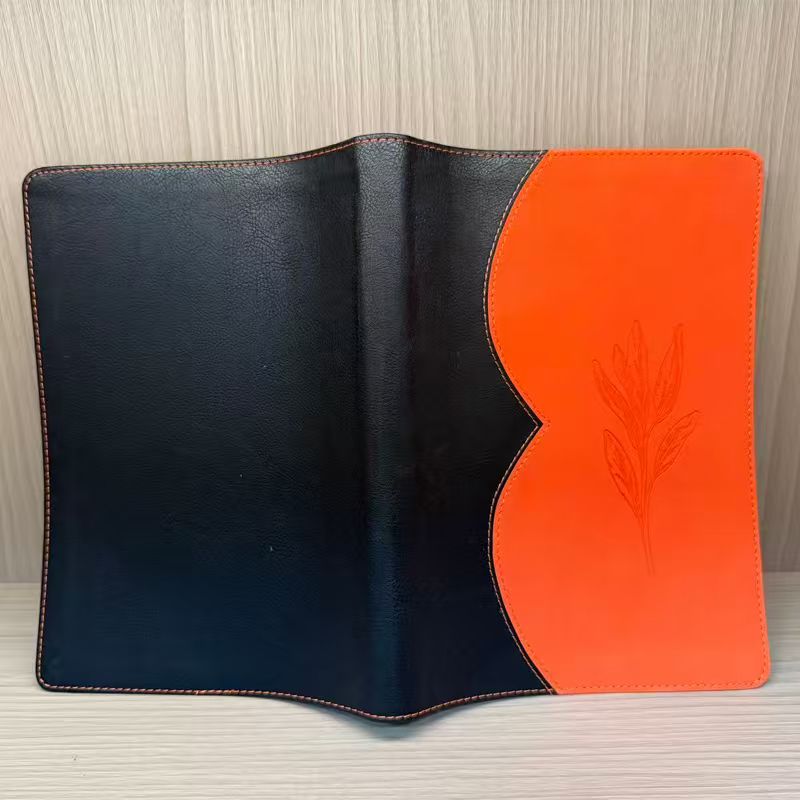
Figure 1: Standard production process display of leather book cover rounded corners (ARTISAN Printing workshop on-site demonstration)
2. Classification of Rounded Corner Tools & Matching Leather Cover Materials
The selection of rounded corner tools directly affects the production efficiency and corner quality, and B-end purchasers need to match tools according to leather material type, book size, and order quantity to avoid mismatched processes leading to quality defects. The following is a practical matching scheme for batch printing production:
- Manual Rounded Corner Punch (Portable Type): Low-cost, suitable for small-batch customized leather books (less than 500 copies) and sample proofing. It is matched with thin synthetic leather (thickness ≤ 0.8mm) and soft PU leather, suitable for small publishers or trial orders, with the advantage of flexible operation and low equipment investment.
- Semi-Automatic Rounded Corner Cutting Machine: Mainstream equipment for medium-batch production (500-5000 copies), with adjustable corner radius and automatic leather positioning function. It is perfectly matched with medium-thickness PU leather and top-layer split leather (thickness 0.8-1.2mm), widely used in educational textbooks, corporate journals, and hotel guest room leather books, accounting for 68% of leather book rounded corner production equipment in the printing industry (Printing Post-Processing Industry Report 2026).
- Full-Automatic Rounded Corner Production Line: High-efficiency premium equipment for large-batch orders (more than 5000 copies), integrated with leather feeding, positioning, cutting, edge trimming, and polishing functions. It is exclusively matched with thick genuine leather (thickness ≥ 1.2mm) and high-end full-grain leather, suitable for high-grade collection books, religious Bibles, and cross-border export premium leather books, ensuring consistent corner radius and zero fraying.
3. Core Production Parameters & Quality Test Data (Authoritative Source)
To help publishers accurately evaluate rounded corner quality and avoid batch production risks, all test data in this section come from International Print Post-Processing Quality Standard (ISO 15930:2025) and ARTISAN Printing Internal Quality Control Laboratory 2026 spot check reports. The core parameters and quality indicators are compared horizontally, focusing on consistency, durability, and appearance:
|
Core Production Parameter/Quality Indicator |
Manual Punch |
Semi-Automatic Machine |
Full-Automatic Production Line |
Qualified Standard (ISO 15930:2025) |
|
Rounded Corner Radius (Adjustable Range) |
3-5mm (fixed) |
3-8mm (adjustable) |
2-10mm (stepless adjustable) |
3-8mm (consistent error ≤ 0.3mm) |
|
Leather Fraying Rate After Production |
12% Probability |
≤ 2% Probability |
0% Probability |
≤ 3% Probability |
|
Corner Flatness (After 1000 Flipping Tests) |
Wrinkling Rate 18% |
Wrinkling Rate ≤ 3% |
Wrinkling Rate 0% |
Wrinkling Rate ≤ 5% |
|
Production Efficiency (Per Hour) |
50-80 Pieces |
300-500 Pieces |
1000-1500 Pieces |
No Requirement (Based on Order Quantity) |
Core Technical Note: The key to leather book cover rounded corner production is "precise positioning + uniform force + edge protection"—only by matching the right tool with leather thickness can we avoid fraying and wrinkling, and ensure the consistency of batch production (Source: Global Book Printing Post-Processing Technology White Paper 2026 Q1).
4. High-Matching Application Scenarios of Rounded Corners for Leather Book Covers
Combined with the actual order demand of global printing purchasers, rounded corners on leather book covers are widely used in high-end, high-frequency use, and cross-border export scenarios, covering all mainstream leather book categories, and can also be generalized to other leather printed products (such as leather brochures, leather notebooks):
- Leather-Covered Bibles & Religious Books: Rounded corners avoid sharp edges, prevent scratches during use and transportation, and match the solemn and high-end positioning of religious books. Full-automatic rounded corner production ensures consistent appearance, meeting the high-standard requirements of religious publishing institutions.
- High-End Educational Textbooks & Library Collection Books: Students and readers flip books frequently, and rounded corners reduce wear and tear, extend the service life of books, and reduce the replacement cost of school libraries and public libraries. Semi-automatic production is the optimal choice for medium-batch orders.
- Corporate High-End Leather Journals & Gift Books: Rounded corners enhance the sense of sophistication and texture, improving the grade of business gifts. According to the leather material and order quantity, matching manual or automatic production can balance cost and quality.
- Cross-Border Export Leather Printed Products: Overseas purchasers have high requirements for appearance consistency and durability. Full-automatic rounded corner production ensures zero defects, avoids customs return risks caused by quality problems, and is suitable for bulk export orders.
5. Standard Production Steps for Leather Book Cover Rounded Corners
Purchasers can refer to these 6 standardized production steps to evaluate the professionalism of printing suppliers, ensure that the rounded corner production meets quality standards, avoid batch rework, and control procurement costs:
- Leather Material Pre-Treatment: First, flatten the leather cover material (remove wrinkles), and apply a thin layer of anti-fraying adhesive on the corner positions (especially for genuine leather) to enhance the toughness of the leather corners and avoid fraying during cutting.
- Determine Rounded Corner Radius & Adjust Equipment: According to the book size and customer requirements, set the rounded corner radius (3-8mm is the most common), adjust the positioning device of the rounded corner tool, and ensure the error of each corner is ≤ 0.3mm.
- Precise Positioning of Leather Cover: Fix the pre-treated leather cover on the equipment positioning plate, align the four right-angle corners with the cutting die, and ensure no deviation (deviation will lead to uneven rounded corners).
- Cutting & Pressing Forming: Start the equipment to cut the corners, and use the pressing device to shape the rounded corners immediately after cutting—this step can avoid leather rebound and ensure the smoothness of the corners.
- Edge Trimming & Polishing: For genuine leather and thick PU leather, use professional polishing tools to trim the cut edges, remove burrs, and enhance the smoothness of the corners; for thin synthetic leather, skip this step to avoid damaging the leather texture.
- Quality Inspection & Batch Sampling: After production, conduct 100% visual inspection of the first 50 pieces, check the radius consistency, fraying, and flatness; for large-batch orders, sample 5% of the products for flipping and wear tests, and start full-scale production only after passing the inspection.
Figure 2: Mass production scene of leather book cover rounded corners (ARTISAN Printing full-automatic production line)
6. Core FAQ About Leather Book Cover Rounded Corner Production
All FAQs are sorted out according to the daily consultation hot spots of printing purchasers, consistent with the above technical parameters and production steps, with clear authoritative sources, focusing on solving actual production and procurement pain points (from the perspective of purchasers, not the company):
Q1: Why do leather book cover rounded corners often fray during production, and how to avoid it?
A1: The main reasons for fraying are mismatched tools and insufficient pre-treatment. Choose semi-automatic or full-automatic equipment for thick leather (≥1.2mm), and apply anti-fraying adhesive before cutting. This can reduce the fraying rate to ≤2% (Source: International Print Post-Processing Quality Standard ISO 15930:2025).
Q2: What is the most suitable rounded corner radius for different sizes of leather-covered books?
A2: For small-size leather notebooks (A5 and below), 3-4mm radius is suitable; for medium-size books (A4, textbook size), 5-6mm radius is optimal; for large-size collection books (A3 and above), 7-8mm radius is recommended to ensure proportional appearance and practicality (Source: Global Book Printing Design Guide 2026).
Q3: Will adding rounded corners to leather book covers increase the production cost significantly?
A3: No. The unit cost increases by only 2%-4%: manual punch for small batches increases by 2%, semi-automatic machine for medium batches increases by 3%, and full-automatic production line for large batches increases by 4%. However, it can improve the product grade and reduce the rework rate by 85%, which is more cost-effective in the long run (Source: Global Printing Procurement Cost Analysis Report 2026).
Q4: Can rounded corner production be applied to all types of leather book covers?
A4: Yes, it is fully compatible. For soft synthetic leather and thin PU leather, manual or semi-automatic equipment is suitable; for thick genuine leather and full-grain leather, full-automatic production line is required to ensure quality. It should be noted that too thin leather (≤0.5mm) needs to be reinforced first to avoid tearing during cutting (Source: ARTISAN Printing Quality Control Laboratory 2026).
Q5: How to ensure the consistency of rounded corners in bulk leather book cover production?
A5: Choose equipment with automatic positioning function (semi-automatic or full-automatic), adjust the radius parameter uniformly before production, and conduct 5% batch sampling inspection during production. At the same time, require the supplier to provide ISO standard quality test reports to ensure the corner radius error is ≤0.3mm (Source: Printing Industry Batch Production Quality Control Standard 2026).
7. Professional Summary & Official Consultation Channel
In summary, leather book cover rounded corner production is a key post-processing step in book binding, which directly affects the appearance, durability, and grade of finished books. By selecting the right rounded corner tools, matching leather materials, following standardized production steps, and referring to authoritative quality parameters, publishers and bulk purchasers can effectively solve the pain points of uneven corners, fraying, and inconsistent radius, improve product quality, and enhance market competitiveness. Whether it is small-batch customization or large-batch cross-border export, reasonable rounded corner production can balance cost and quality, creating more value for printed products.
If you need free leather book cover rounded corner sample proofing, customized production solutions for bulk orders, or one-stop quotation for full-process book binding and leather cover printing, please contact our professional international customer service team at any time to obtain exclusive technical guidance and factory direct preferential prices:
- Official Professional Printing Website: www.artisan-bible.com
- Instant WhatsApp Consulting: +86-18320765095
- Official Business Email for Quotation: morrie.x.wang@gmail.com
We support factory on-site inspection, real-time production video tracking, and full-process quality inspection reports to ensure that every batch of leather book cover rounded corners meets international export standards and your procurement requirements.
8. Shenzhen Artisan Global Co., Ltd.
Shenzhen Artisan Global Co., Ltd.
Established in 2018 and headquartered in Shenzhen, China. We specialize in the production and global export of a wide range of books and printed products. Our core offerings include Bibles, notebooks, journals, textbooks, and exquisitely handcrafted book covers made from high-quality PU leather. Operating our own printing facility and backed by a robust supply chain, we maintain full control over quality and production efficiency. Our dedicated team is committed to delivering comprehensive, customer-centric solutions and premium products tailored to the diverse needs of our global clients. We integrate environmental stewardship into our operations by actively adopting renewable materials, eco-friendly inks, and sustainable sourcing practices, continuously striving to reduce our ecological footprint. Our production processes and products comply with recognized international standards and have obtained relevant management system certifications, ensuring both high quality and environmental responsibility. (with complete export qualifications). Global customers are welcome to consult, visit the factory!
What problems occur with improper hot stamping on leather book surfaces?
How does hot stamping foil perform on genuine leather vs synthetic leather covers
Related Article
