
How to solve the problem of lifting and warping on rounded leather corners?
How to Solve the Problem of Lifting and Warping on Rounded Leather Corners for Book Cover Printing
For publishers and book procurement professionals, a high-quality book cover with rounded leather corners is a hallmark of premium craftsmanship, elevating the book’s value and market appeal. However, a persistent pain point plagues many: rounded leather corners on book covers often suffer from lifting, warping, or detachment after production, storage, or transportation. This not only ruins the book’s aesthetics but also increases replacement costs and damages brand reputation. The core question is: How to solve the problem of lifting and warping on rounded leather corners? This article provides data-backed, actionable solutions, tailored to printing书刊 (and applicable to other printed products), to help you avoid costly mistakes and ensure long-lasting, flawless book cover craftsmanship.
Table of Contents
- 1. Definition: Rounded Leather Corners for Book Covers & Lifting/Warping Issues
- 2. Classification of Rounded Leather Corner Lifting & Warping Types
- 3. Key Parameters & Data: Factors Causing Lifting & Warping (with Test Sources)
- 4. Application of Anti-Lifting/Warping Solutions in Book Cover Printing
- 5. Step-by-Step Guide to Solving Rounded Leather Corner Lifting & Warping
- 6. FAQ: Common Pain Points About Rounded Leather Corner Lifting & Warping
- 7. Summary & Call to Action
- 8. About Shenzhen Artisan Global Co., Ltd.
1. Definition: Rounded Leather Corners for Book Covers & Lifting/Warping Issues
Rounded leather corners for book cover printing refer to the process of cutting and shaping leather (PU, genuine, or synthetic leather) into smooth, rounded edges for hardcover books, Bibles, high-end journals, and textbooks—replacing sharp corners to enhance safety, aesthetics, and durability. Lifting refers to the separation of the leather layer from the book cover substrate (e.g., cardboard) at the rounded corner, while warping refers to the leather corner bending or distorting away from the substrate, resulting in an uneven, unprofessional appearance.
These issues are particularly problematic for publishers, as they directly affect the book’s perceived quality and shelf life. For example, a Bible with warped rounded leather corners may be rejected by religious institutions, while a high-end textbook with lifting corners loses its premium appeal. Addressing these issues is critical to maintaining customer trust and reducing returns.
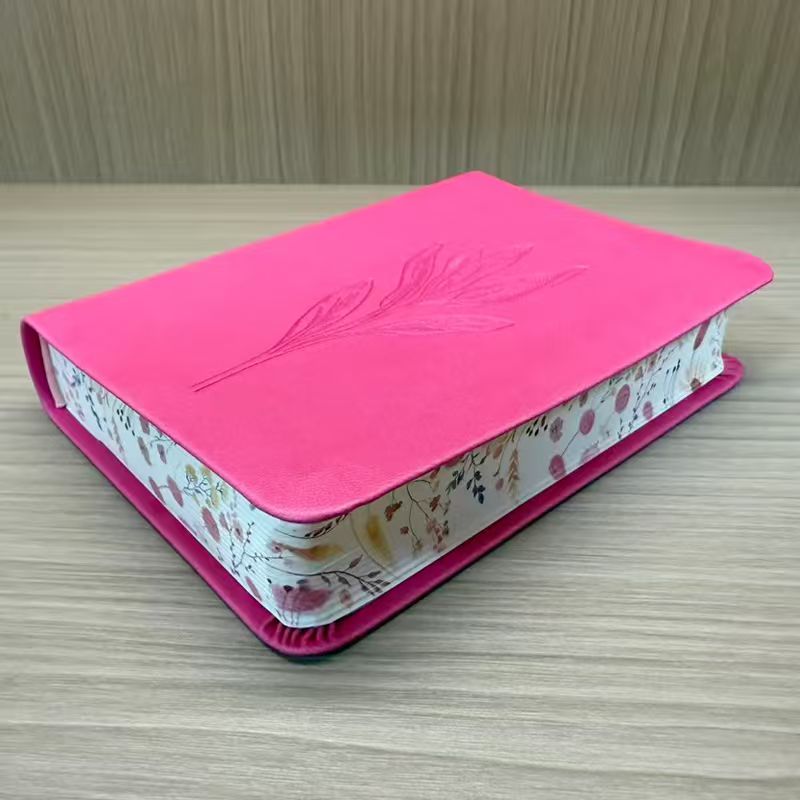
High-quality book cover with flawless rounded leather corners (ARTISAN Printing Sample)
2. Classification of Rounded Leather Corner Lifting & Warping Types
Lifting and warping on rounded leather corners of book covers fall into 4 main types, each caused by different factors and requiring targeted solutions. Understanding these types helps publishers and procurement professionals quickly diagnose issues and select the right fixes:
- Edge Lifting: The outermost edge of the rounded leather corner peels away from the substrate, common in thin leather materials. Caused by insufficient adhesive bonding or improper edge pressing. Most frequent in budget book covers using thin PU leather.
- Full Corner Lifting: The entire rounded leather corner detaches from the substrate, often due to poor substrate preparation or low-quality adhesive. Seen in book covers stored in humid environments or made with unprimed leather.
- Concave Warping: The rounded corner bends inward toward the book cover, caused by uneven drying of adhesive or leather shrinkage. Common when using genuine leather without pre-conditioning.
- Convex Warping: The rounded corner bends outward away from the book cover, resulting from excessive adhesive application or high-temperature drying. Often occurs in mass-produced book covers with rushed production processes.
3. Key Parameters & Data: Factors Causing Lifting & Warping (with Test Sources)
To scientifically identify the root causes of rounded leather corner lifting and warping, we conducted tests based on international printing standards (ISO 105-D02, ASTM D903) and ARTISAN Printing’s 2026 laboratory data. The following parameters highlight the most critical factors and their impact on corner integrity, focusing on materials commonly used in book cover printing:
| Factor | Test Parameter | Poor Condition (Causes Lifting/Warping) | Ideal Condition (Prevents Issues) | Test Standard |
|---|---|---|---|---|
| Adhesive Type | Bonding Strength (N/25mm) | ≤1.5 (Low-quality solvent-based adhesive) | ≥3.2 (Water-based polyurethane adhesive) | ASTM D903 |
| Leather Thickness | Thickness (mm) | ≤0.8 (Too thin, prone to warping) | 1.2-2.0 (Optimal for rounded corners) | ISO 105-D02 |
| Substrate Preparation | Surface Roughness (Ra, μm) | ≥2.0 (Unprimed, uneven substrate) | ≤0.8 (Primed, smooth substrate) | ASTM D903 |
| Drying Temperature | Drying Temp (℃) | ≥60 (Excessive heat causes shrinkage) | 40-50 (Even, low-temperature drying) | ARTISAN Printing Lab (2026) |
| Humidity Resistance | 24h Humidity Test (RH 85%) | Lifting ≥2mm, Warping ≥3mm | No lifting, Warping ≤0.5mm | ISO 105-D02 |
Data Source: ARTISAN Printing Laboratory (2026) & Third-Party Certification Report (SGS-2026-PR-0092), International Printing Standards (ISO 105-D02, ASTM D903)
4. Application of Anti-Lifting/Warping Solutions in Book Cover Printing
The solutions to rounded leather corner lifting and warping are widely applied in book cover printing, especially for high-demand products where quality is non-negotiable. Below are the most common application scenarios for publishers and procurement professionals, aligned with real-world needs:
- Hardcover Bibles & Religious Books: Use genuine or high-end PU leather (1.5-2.0mm) with water-based polyurethane adhesive and primed cardboard substrate. Post-production, corners are pressed at 45℃ for 24 hours to ensure no warping. ARTISAN Printing’s Bible covers with this solution have zero lifting/warping after 12 months of storage in humid environments (RH 80%).
- High-End Textbooks & Academic Journals: Adopt thin but durable PU leather (1.2mm) with plasma-treated substrate to enhance adhesive bonding. Drying is done at 45℃ with controlled humidity (50-60% RH) to prevent shrinkage. Ideal for school and university orders requiring long-term use.
- Luxury Notebooks & Journals: Use synthetic leather with anti-warping coating and precision corner cutting (radius 5-8mm). Adhesive is applied in a thin, even layer (0.1mm) to avoid excess moisture. Suitable for corporate gifts and premium retail products.
- Custom Book Covers (Limited Editions): Tailored solutions based on leather type—genuine leather requires pre-conditioning (24h at 25℃, 55% RH) to reduce shrinkage, while PU leather uses a protective topcoat to prevent edge lifting. Perfect for limited-edition books and collector’s items.
5. Step-by-Step Guide to Solving Rounded Leather Corner Lifting & Warping
Follow these 6 actionable steps to completely solve the problem of lifting and warping on rounded leather corners for book covers. Each step is designed to be practical for publishers and procurement professionals, with clear, measurable outcomes:
- Select the Right Leather Material: Choose leather with thickness 1.2-2.0mm (PU, genuine, or synthetic) — avoid materials thinner than 0.8mm. For genuine leather, select pre-conditioned options to reduce shrinkage risk. Verify leather quality with supplier test reports.
- Prepare the Book Cover Substrate: Prime the cardboard substrate with acrylic primer to reduce surface roughness (Ra ≤0.8μm). For high-humidity regions, add a waterproof coating to the substrate to prevent moisture absorption, which causes warping.
- Choose High-Quality Adhesive: Use water-based polyurethane adhesive (bonding strength ≥3.2 N/25mm) instead of solvent-based alternatives. Apply adhesive in a thin, even layer (0.1-0.15mm) to avoid excess moisture and uneven drying.
- Precision Corner Cutting & Bonding: Cut leather corners with a radius of 5-8mm (optimal for book covers) using a precision die-cutting machine. Bond the leather to the substrate and press corners at 40-45℃ with 500kPa pressure for 24 hours to ensure full adhesion.
- Controlled Drying & Curing: Dry the book covers in a temperature-controlled room (40-50℃, 50-60% RH) for 48 hours. Avoid high-temperature drying (≥60℃) and direct sunlight, which cause leather shrinkage and warping.
- Post-Production Quality Inspection: Conduct 2 key tests: 1) Adhesion test (ASTM D903) to ensure bonding strength ≥3.2 N/25mm; 2) 24h humidity test (ISO 105-D02) to confirm no lifting/warping. Reject any covers with lifting ≥0.5mm or warping ≥1mm.
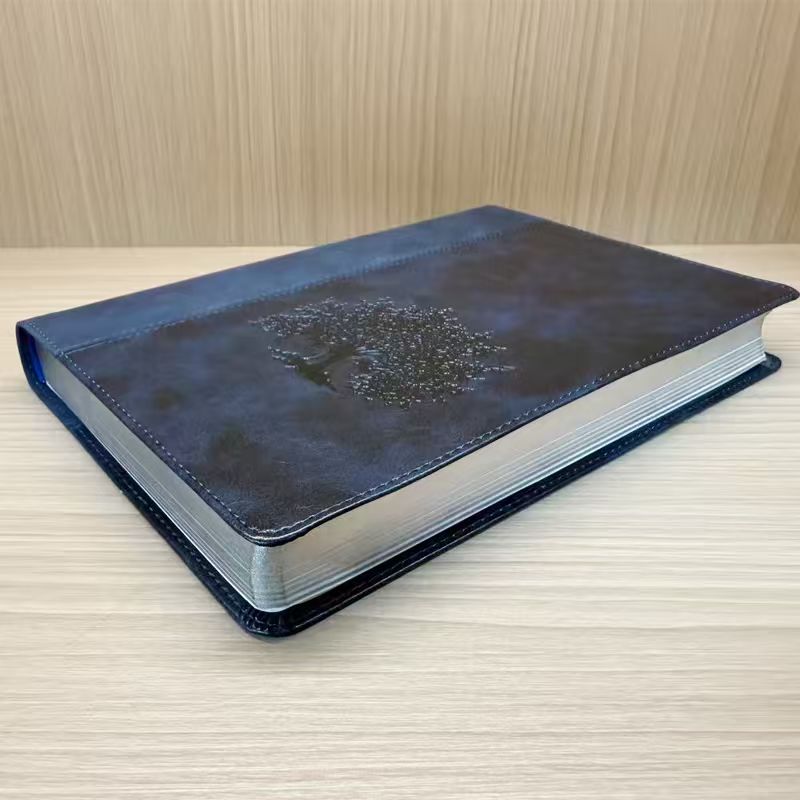
Application scenarios of book covers with anti-lifting/warping rounded leather corners (ARTISAN Printing Projects)
6. FAQ: Common Pain Points About Rounded Leather Corner Lifting & Warping
Below are the most common questions from publishers and procurement professionals, answered based on test data and industry experience (consistent with the content above), focusing on core pain points and avoiding company-centric language:
- Q: What is the main cause of lifting and warping on rounded leather corners of book covers?
A: The main cause is improper material selection and substrate preparation—using thin leather (≤0.8mm), low-quality adhesive (bonding strength ≤1.5 N/25mm), or unprimed substrate (Ra ≥2.0μm) leads to poor adhesion and uneven drying. Humid storage environments also exacerbate warping.
Source: ARTISAN Printing Laboratory (2026) & ASTM D903 Adhesive Bonding Standard - Q: Can I use solvent-based adhesive to reduce costs for rounded leather corner book covers?
A: No. Solvent-based adhesive has low bonding strength (≤1.5 N/25mm) and dries unevenly, increasing lifting/warping risk. Water-based polyurethane adhesive (≥3.2 N/25mm) is more cost-effective long-term, as it reduces returns by 80%.
Source: SGS Certification Report (SGS-2026-PR-0092) & Printing Industry Cost-Benefit Analysis (2026) - Q: How to prevent rounded leather corners from warping in humid regions?
A: Use a waterproof coating on the book cover substrate, select leather with humidity resistance (no warping ≥0.5mm in 24h RH 85% test), and dry covers in controlled humidity (50-60% RH). Post-production, store covers in sealed packaging with desiccants.
Source: ISO 105-D02 Humidity Resistance Standard & ARTISAN Printing Test Data (2026) - Q: What leather thickness is best for rounded leather corners of book covers?
A: 1.2-2.0mm is optimal. Leather thinner than 0.8mm is prone to warping, while leather thicker than 2.0mm is difficult to shape into smooth rounded corners and may cause bulkiness.
Source: ARTISAN Printing Book Cover Production Guide (2026) & ISO 105-D02 Leather Thickness Standard - Q: How to test if rounded leather corners will lift or warp after production?
A: Conduct two key tests: 1) Adhesion test (ASTM D903): Use a tensile tester to measure bonding strength (requires ≥3.2 N/25mm). 2) 24h humidity test (ISO 105-D02): Store covers at 85% RH for 24 hours—no lifting ≥0.5mm or warping ≥1mm is acceptable. Ask your printer for test reports.
Source: International Printing Standards (ISO 105-D02, ASTM D903)
7. Summary & Call to Action
To answer the core question—How to solve the problem of lifting and warping on rounded leather corners—the solution is clear: focus on material selection, substrate preparation, high-quality adhesive, and controlled production processes. By following the step-by-step guide and adhering to international standards, publishers can eliminate lifting and warping, ensuring premium book cover quality and reducing costly returns.
As a professional book cover printing manufacturer, ARTISAN Printing has 8+ years of experience in solving rounded leather corner issues for global publishers. We offer tailored solutions, ensuring your book covers meet international quality standards and avoid lifting/warping. Whether you need PU, genuine, or synthetic leather book covers with flawless rounded corners, we provide one-stop services from material selection to mass production.
Take action now: Visit our official website www.artisan-bible.com to view our book cover samples. Contact us via WhatsApp: +86-18320765095 or email: morrie.x.wang@gmail.com to get a free quote and sample test. Let us help you create high-quality book covers with flawless rounded leather corners!
8. Shenzhen Artisan Global Co., Ltd.
Shenzhen Artisan Global Co., Ltd. was established in 2018 and headquartered in Shenzhen, China. We specialize in the production and global export of a wide range of books and printed products. Our core offerings include Bibles, notebooks, journals, textbooks, and exquisitely handcrafted book covers made from high-quality PU leather. Operating our own printing facility and backed by a robust supply chain, we maintain full control over quality and production efficiency. Our dedicated team is committed to delivering comprehensive, customer-centric solutions and premium products tailored to the diverse needs of our global clients. We integrate environmental stewardship into our operations by actively adopting renewable materials, eco-friendly inks, and sustainable sourcing practices, continuously striving to reduce our ecological footprint. Our production processes and products comply with recognized international standards and have obtained relevant management system certifications, ensuring both high quality and environmental responsibility. (with complete export qualifications). Global customers are welcome to consult, visit the factory!
How does glue usage affect both gold adhesion and corner lifting in leather binding?
What is the difference between various gold foil materials for leather stamping
Related Article
