
How Religious Institutions Can Adapt Custom Web Offset Bible Printing to Their Needs
2026-04-22
How Religious Institutions Can Adapt Custom Web Offset Bible Printing to Their Needs
For religious institutions and publishers, finding the right book printing solution—especially for custom web offset Bible printing—often comes with pain points: inconsistent print quality, difficulty aligning with religious norms, inefficient production cycles, and failure to match specific usage scenarios. This article focuses on solving these core pain points, guiding you to adapt custom web offset Bible printing to your needs, while providing professional, data-backed book printing insights to help you make informed procurement decisions.
Table of Contents
1. Introduction: Why Custom Web Offset Bible Printing Matters for Religious Institutions
Religious institutions rely on high-quality Bibles to support worship, evangelism, education, and community outreach. Unlike generic book printing, custom web offset Bible printing is designed to meet the unique needs of religious organizations—combining efficiency, durability, and adherence to religious norms. For procurement teams and publishers, choosing the right book printing solution directly impacts the usability, cost-effectiveness, and impact of the Bibles they distribute.
This section sets the foundation for understanding why custom web offset printing is the preferred choice for religious institutions, addressing the core pain points mentioned earlier and outlining how the following content will guide you to adapt these services to your specific needs. From defining key terms to highlighting critical parameters, we’ll ensure you have the knowledge to make confident procurement decisions.
2. Book Printing Basics: Definitions & Core Types
2.1 What is Book Printing?
Book printing is the professional process of transforming digital or physical content (text, images, symbols) into physical books through a series of steps: typesetting, ink application, printing, and binding. It encompasses a wide range of publications, including Bibles, textbooks, journals, notebooks, and brochures—each requiring tailored techniques to meet their unique usage needs.
2.2 Core Printing Technologies for Book Production
When selecting book printing services, understanding the different technologies is key to matching your order size and customization needs. The three most common technologies are:
-
Web Offset Printing: Ideal for large-scale orders (5,000+ copies), using continuous paper rolls for high efficiency (8,000-12,000 sheets per hour) and consistent color quality. This is the primary technology for custom Bible printing for religious institutions.
-
Sheet-Fed Offset Printing: Suitable for small to medium orders (100-5,000 copies), offering greater flexibility in paper selection and special finishes but higher unit costs than web offset printing.
-
Digital Printing: Best for small-batch, personalized orders (fewer than 100 copies), with quick turnaround and on-demand capabilities—perfect for test runs or limited-edition religious materials.
2.3 Common Binding Methods for Bibles
Binding directly impacts the durability and usability of Bibles, especially for frequent use in worship or study. The most popular binding methods for religious institutions include:
-
Case Binding: High-end and durable, with a hardcover (often PU leather, linen, or handmade materials) and sewn pages—ideal for premium Bibles used in church pulpits or personal collections.
-
Perfect Binding: Cost-effective, with glued pages and soft/hard covers—suitable for mass-distributed Bibles due to its lightweight and affordability.
-
Saddle Stitching: Best for thin Bibles or booklets (fewer than 100 pages), using staples for simple, cost-effective binding—ideal for supplementary religious materials.
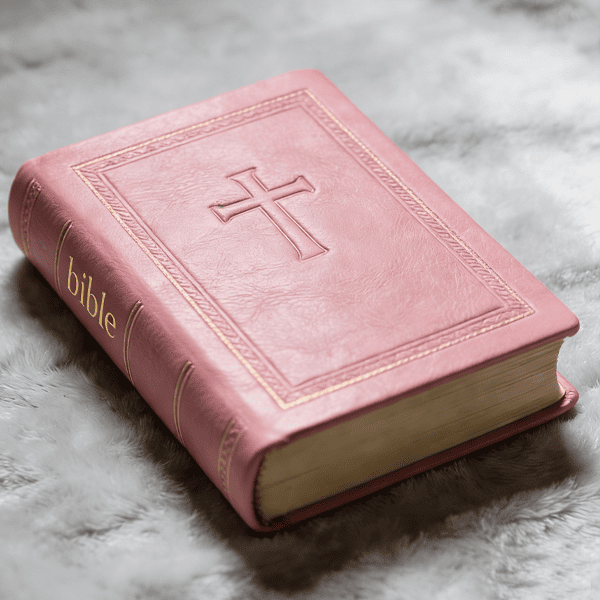
3. Custom Web Offset Bible Printing: Key Features & Advantages
As a specialized branch of book printing, custom web offset Bible printing is engineered to meet the unique requirements of religious institutions. It combines the efficiency of web offset technology with tailored customization options, making it the top choice for large-scale Bible procurement.
3.1 Key Features of Custom Web Offset Bible Printing
-
High Efficiency & Cost-Effectiveness: Continuous paper rolls enable fast production speeds (up to 10,000 sheets per hour), reducing unit costs for large orders—critical for religious institutions distributing Bibles to congregations or communities.
-
Consistent Quality: Precise color registration (±0.1 mm) ensures clear text, sharp images, and uniform color across all copies—essential for Bible verses and religious symbols.
-
Full Customization: Tailor every aspect to your needs, including cover material (PU leather, cloth, handmade paper), text font (easy-to-read for long sessions), page size (standard 105x170mm or custom), and special finishes (embossing, gold foil, UV coating) to align with religious norms.
-
Durability: Supports high-quality binding methods (case binding, perfect binding) and eco-friendly materials, ensuring Bibles withstand frequent use in worship or study.
3.2 Advantages Over Other Printing Methods
For religious institutions ordering 5,000+ Bibles, web offset printing offers distinct advantages over sheet-fed or digital printing: lower unit costs, faster production times, and consistent quality at scale. Unlike digital printing, it supports large-scale customization without sacrificing efficiency, making it ideal for evangelism campaigns or church-wide Bible distributions. Compared to sheet-fed printing, it reduces production time by 30-40% for large orders, ensuring timely delivery for ministry activities.
Figure 1: Web Offset Printing Process for Custom Bibles (High-Quality Text & Consistent Color)
4. Critical Parameters & Quality Standards for Bible Printing
For religious institutions and publishers, understanding the core parameters of book printing is essential to ensuring the final product meets quality requirements and aligns with usage needs. Below are the key parameters, with data sources from industry standards and practical printing experience, focused on Bible-specific requirements:
|
Parameter
|
Standard Specification
|
Bible-Specific Application
|
Data Source
|
|---|---|---|---|
|
Paper Weight
|
50-120 g/m² (text); 200-300 g/m² (cover)
|
Text: 60-80 g/m² (lightweight, easy to carry); Cover: 250-300 g/m² (durable for frequent use)
|
ISO 12647-2:2013
|
|
Color Registration
|
±0.1 mm
|
Ensures clear verses and symbols—no blurring or misalignment
|
Printing Industry Association (PIA) Standards
|
|
Ink Type
|
Eco-friendly soy-based ink (VOC ≤ 50 g/L)
|
Non-toxic, odorless—safe for long-term contact (critical for children’s Bibles)
|
EPA (Environmental Protection Agency) Guidelines
|
|
Binding Strength
|
≥ 5 N (case binding); ≥ 3 N (perfect binding)
|
Prevents pages from falling out—ensures durability for frequent use
|
ASTM D3451-17 Standard
|
|
Printing Speed (Web Offset)
|
8,000-12,000 sheets/hour
|
Meets large-scale needs (e.g., 10,000 Bibles in 2-3 days)
|
Web Offset Printing Association (WOPA) Data
|
5. Application Scenarios: Tailored to Religious Institution Needs
Book printing—especially custom web offset Bible printing—supports a wide range of religious institution activities. Below are the most common scenarios, aligned with the core needs of churches, seminaries, and evangelism organizations:
5.1 Worship & Congregational Use
Churches and religious centers need durable, easy-to-read Bibles for weekly worship services and Bible study groups. Custom web offset printing allows for large orders (5,000+ copies) of case-bound or perfect-bound Bibles with clear fonts, water-resistant covers, and optional church logos or embossed religious symbols—ensuring they withstand frequent use and reflect the institution’s identity.
5.2 Evangelism & Community Outreach
Evangelism programs require cost-effective, portable Bibles for mass distribution to communities, schools, and hospitals. Web offset printing enables low unit costs for large orders (10,000+ copies), with customization options like compact sizes, simple covers, and lightweight paper—making them easy to carry and distribute to non-believers or new converts.
5.3 Religious Education & Training
Seminaries, religious schools, and training centers need custom printed materials, including Bibles, study guides, and textbooks. Book printing services can tailor these materials to the institution’s curriculum—adding annotations, study questions, or custom illustrations—and use durable binding to withstand repeated use by students and instructors.
5.4 Personal & Gifting Use
Religious individuals or small groups often seek personalized Bibles for personal study or gifting (e.g., baptism, confirmation). While small-batch orders may use digital printing, large-scale personalization (e.g., 1,000+ personalized Bibles with names) can be efficiently handled with web offset printing, combining customization with cost-effectiveness.
Figure 2: Custom Web Offset Bibles in Church Worship Scenario
6. Step-by-Step Guide to Selecting Custom Web Offset Bible Printing
To adapt custom web offset Bible printing to your religious institution’s needs, follow this practical step-by-step guide—focused on solving procurement pain points and ensuring the final product aligns with your requirements:
Step 1: Clarify Your Core Needs & Usage Scenario
First, define the purpose of the Bibles (worship, evangelism, study, etc.), the expected order quantity, and usage environment. For example: If the Bibles are for worship, prioritize durability and clear fonts; if for evangelism, focus on cost-effectiveness and portability. This step ensures you avoid overspending on unnecessary features or choosing unsuitable printing options.
Step 2: Determine Customization Requirements
List specific customization needs, including: cover material (PU leather, linen, paper), text font (easy to read, suitable for religious content), page size (standard Bible size: 105x170mm, or custom), binding method (case binding, perfect binding), special finishes (embossing, UV coating, gold foil), and any additional content (church logo, dedication, notes). For religious institutions, ensure the design aligns with religious norms (e.g., no inappropriate images or text).
Step 3: Select the Right Printing Technology & Supplier
For orders of 5,000+ copies, web offset printing is the most cost-effective and efficient option. When selecting a book printing supplier, prioritize those with experience in religious printing, ISO certifications, and a proven track record of delivering high-quality Bibles. Request samples to verify print quality, color consistency, and binding strength before placing a large order.
Step 4: Confirm Parameters & Quality Standards
Work with the supplier to confirm core parameters: paper weight, ink type (eco-friendly soy-based ink is recommended), color registration, and binding strength—refer to the data standards in the previous section. Ensure the supplier provides a quality assurance agreement to avoid quality issues (e.g., blurry text, loose binding).
Step 5: Review Samples & Finalize the Order
Request a pre-production sample to check all customization details, print quality, and binding. Make adjustments (e.g., font size, color, cover material) if needed, then finalize the order and confirm the production timeline. For large orders, ask for a production progress update to ensure on-time delivery.
7. FAQ About Book Printing & Custom Web Offset Bible Printing
Below are the most common questions from religious institutions and publishers regarding book printing and custom web offset Bible printing, with answers based on industry standards and practical experience (answer sources are indicated for transparency):
Q1: What is the minimum order quantity for custom web offset Bible printing?
A: The minimum order quantity (MOQ) for web offset Bible printing is typically 5,000 copies. This is because web offset printing requires setting up the printing press (plate making, color calibration), which is cost-effective only for large orders. For smaller orders (100-5,000 copies), sheet-fed offset printing or digital printing is more suitable. (Source: Web Offset Printing Association (WOPA) Industry Guidelines)
Q2: How to ensure the print quality of Bibles meets religious institution requirements?
A: To ensure quality, follow these steps: 1) Select a supplier with ISO 12647-2:2013 certification (offset printing quality standard); 2) Request pre-production samples to check text clarity, color consistency, and binding strength; 3) Confirm the use of eco-friendly, non-toxic ink (EPA guidelines); 4) Sign a quality assurance agreement with the supplier. (Source: ISO 12647-2:2013 Standard & Printing Industry Quality Control Best Practices)
Q3: Can we customize the Bible cover with our church logo and religious symbols?
A: Yes, most book printing suppliers offer cover customization, including embossing, gold foil, UV coating, and printing of church logos, religious symbols, or dedication text. You can provide your design files (AI, PSD, or PDF) to the supplier, who will adjust the design to fit the cover size and printing requirements. Ensure the design aligns with your religious norms before finalizing. (Source: Custom Book Printing Industry Practices)
Q4: What is the production cycle for custom web offset Bible printing?
A: The production cycle depends on the order quantity and customization complexity. For orders of 5,000-10,000 copies, the typical cycle is 7-10 working days (including plate making, printing, binding, and quality inspection). For larger orders (10,000+ copies), the cycle may extend to 10-15 working days. Rush orders can be accommodated with additional fees. (Source: Printing Industry Production Time Standards)
Q5: How to choose the right paper for Bible printing?
A: The choice of paper depends on the usage scenario: 1) For worship Bibles (frequent use), choose 60-80 g/m² thin text paper (lightweight but durable) and 250-300 g/m² cover paper (water-resistant, wear-resistant); 2) For personal study Bibles, choose 70-80 g/m² acid-free paper (prevents yellowing over time); 3) For evangelism Bibles, choose cost-effective 50-60 g/m² text paper. All paper should be eco-friendly and non-toxic. (Source: Paper Industry Association Guidelines & Bible Printing Best Practices)
8. Summary & Contact Information
Custom web offset Bible printing is a high-efficiency, high-quality solution for religious institutions seeking to meet large-scale book printing needs. By following the step-by-step selection guide, you can adapt the printing service to your specific requirements—whether for worship, evangelism, or education—while ensuring quality, compliance, and cost-effectiveness.
If you are a religious institution or publisher looking for reliable, custom book printing services, we are here to help. Our team has years of experience in Bible printing, adhering to international quality standards and providing tailored solutions to meet your unique needs. Contact us today to get a free quote and sample:
We look forward to collaborating with you to deliver high-quality, custom book printing solutions that meet your needs and help you achieve your goals.
9. Shenzhen Artisan Global Co., Ltd.
About Us
Shenzhen Artisan Global Co., Ltd. was established in 2018 and headquartered in Shenzhen, China. We specialize in the production and global export of a wide range of books and printed products. Our core offerings include Bibles, notebooks, journals, textbooks, and exquisitely handcrafted book covers made from high-quality PU leather. Operating our own printing facility and backed by a robust supply chain, we maintain full control over quality and production efficiency. Our dedicated team is committed to delivering comprehensive, customer-centric solutions and premium products tailored to the diverse needs of our global clients. We integrate environmental stewardship into our operations by actively adopting renewable materials, eco-friendly inks, and sustainable sourcing practices, continuously striving to reduce our ecological footprint. Our production processes and products comply with recognized international standards and have obtained relevant management system certifications, ensuring both high quality and environmental responsibility. (with complete export qualifications). Global customers are welcome to consult and visit the factory!
What Is the Most Durable Binding for Thick Bibles?
Why Do Customers Choose Us for Rotogravure Bible Printing?
Related Article

This guide breaks down their core differences to help you select the optimal stamping for your Bible printing project.
Difference Between Low-Temperature and High-Temperature Foil Stamping for Bibles
Discover expert solutions for thick bible printing. Learn how perfect binding techniques prevent cracking, enhance durability, and meet religious book quality standards. Trusted by global publishers.
How to Prevent Cracking in Perfect Binding for Thick Bibles?
Struggling with inconsistent print quality, fragile bindings, or non-compliant materials in bible printing? ARTISAN Printing delivers strict quality control for religious book printing & binding, ensuring durability, accuracy, and compliance.
How Do Bible Printing Manufacturers Implement Quality Control?