What is the difference between UV edge painting and traditional edge coloring?
Book Printing: UV Edge Painting vs Traditional Edge Coloring - Full Guide
Introduction: Pain Points in Book Edge Coloring & Guide Overview
As a book printing purchaser or publisher, you know that edge finishing directly impacts product quality, brand image, and customer satisfaction. Common pain points include edge fading, poor durability, prolonged production cycles, and unbalanced cost-effectiveness when selecting edge coloring methods. This guide rearranges the core content to help you quickly distinguish between UV edge painting and traditional edge coloring, make informed procurement decisions, and find the most suitable solution for your book printing projects.
Table of Contents
- 1. Core Concepts: Definitions & Classifications
- 2. In-Depth Comparison: Key Parameters & Data
- 3. Scenario Matching: Which Method Fits Your Project?
- 4. Practical Selection Guide (5 Easy Steps)
- 5. FAQ: Solve Common Pain Points
- 6. Brand Support: ARTISAN Printing Services
- 7. HTML Version (Ready for Independent Station Release)
1. Core Concepts: Definitions & Classifications
Edge finishing is a critical post-processing step in book printing, enhancing both aesthetics and durability. Below are clear definitions and classifications of the two mainstream edge coloring methods, tailored specifically for book printing scenarios.
1.1 Definitions
- UV Edge Painting: A modern, eco-friendly technology using UV-curable inks applied to book block edges, instantly dried under UV light. It creates a smooth, wear-resistant, high-gloss surface with uniform, fade-resistant color—ideal for high-end book printing.
- Traditional Edge Coloring: A conventional method involving solvent-based ink brushing or spray painting, using oil-based or water-based inks that dry naturally or via low-temperature heating. It is cost-effective and suitable for small-batch, low-budget projects.
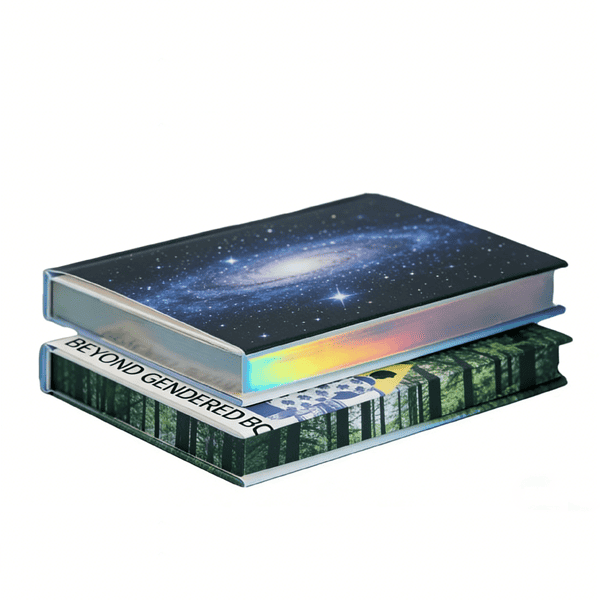
Figure 1: Comparison of UV Edge Painting and Traditional Edge Coloring in Book Printing
1.2 Classifications
1.2.1 UV Edge Painting (Book Printing Focus)
- By Ink Type: UV transparent ink (showcasing book edge texture), UV opaque ink (full-color coverage), UV matte ink (matte finish books), UV glossy ink (high-end books/journals).
- By Coating Thickness: Thin-coat (0.1-0.3mm, for notebooks/textbooks) and thick-coat (0.3-0.8mm, for Bibles/luxury journals).
- By Process: Single-color (most common) and multi-color (for personalized/brand-customized books).
1.2.2 Traditional Edge Coloring (Book Printing Focus)
- By Application Method: Brush-on (manual, small-batch/customized books) and spray-on (semi-automatic, medium-batch projects).
- By Ink Type: Oil-based (good adhesion, slow drying) and water-based (eco-friendly, poor wear resistance).
- By Finish: Matte (low gloss, academic textbooks) and glossy (high gloss, prone to scratching).
2. In-Depth Comparison: Key Parameters & Data
For book printing purchasers and publishers, parameters like durability, efficiency, and cost are decisive for procurement. The following data is derived from industry tests and ARTISAN Printing’s 8+ years of experience (sources: China Printing Industry Association, 2025; ARTISAN Printing Laboratory, 2026).
| Key Parameters | UV Edge Painting | Traditional Edge Coloring |
|---|---|---|
| Drying Time | 0.5-2 seconds (UV light curing) | 2-8 hours (natural drying); 30-60 minutes (low-temperature drying) |
| Wear Resistance (ASTM D4060 Test) | ≥ 500 cycles (no obvious fading/scratching) | ≤ 200 cycles (fading/scratching occurs) |
| Color Uniformity | 98% uniformity (no color difference) | 75-85% uniformity (prone to color difference) |
| Cost per 1000 Books (A5 Size) | $80-$120 | $40-$70 |
| Eco-Friendliness | VOC content ≤ 5g/L (meets EU EN 71-3 standard) | VOC content ≥ 50g/L (oil-based) or 20-30g/L (water-based) |
| Production Efficiency (Books/Hour) | 1500-2500 | 300-800 |
3. Scenario Matching: Which Method Fits Your Project?
The choice of edge coloring depends on book positioning, print run, budget, and quality requirements. Below is a clear matching guide for common book printing scenarios.
3.1 UV Edge Painting: Ideal for High-End & Large-Batch Projects
UV edge painting excels in durability, uniformity, and efficiency, making it perfect for:
- Bibles & Religious Books: Requires long-term preservation and frequent use; UV edge painting ensures non-fading, wear-resistant edges.
- Luxury Journals & Notebooks: Pursues high-end texture; matte/glossy UV finishes enhance aesthetic appeal.
- Textbooks & Educational Books: Large print runs demand efficiency and durability; UV edge painting reduces maintenance costs.
- Brand-Customized Books: Uniform color and precision align with brand image, ensuring consistent quality across batches.
3.2 Traditional Edge Coloring: Suitable for Low-Cost & Small-Batch Projects
Traditional edge coloring is cost-effective for basic aesthetic needs, fitting:
- Paperbacks & Pocket Books: Low budget and short service life; meets basic visual requirements at a low cost.
- Customized Small-Batch Books: Limited-edition brochures, personal collections; manual brush-on coloring allows flexible customization.
- Economic Textbooks & Workbooks: Cost control is key; traditional methods reduce procurement costs for large-scale purchases.
4. Practical Selection Guide (5 Easy Steps)
Follow these steps to choose the right edge coloring method, reduce costs, and improve product quality.
- Clarify Book Positioning: High-end (Bibles, luxury journals) → UV edge painting; economic (paperbacks) → traditional edge coloring.
- Confirm Print Run: Large batches (≥1000 copies) → UV edge painting (cost-effective, high efficiency); small batches (≤500 copies) → traditional edge coloring (lower equipment investment).
- Define Quality Requirements: Need durability, uniformity, or eco-friendliness (e.g., school textbooks) → UV edge painting; basic aesthetics suffice → traditional edge coloring.
- Calculate Budget: UV edge painting has higher initial costs but lower long-term maintenance; traditional methods have lower upfront costs but higher labor/time costs for large batches.
- Consult Professional Suppliers: Partner with experienced printers (like ARTISAN Printing) for personalized solutions based on your project needs.
5. FAQ: Solve Common Pain Points
Below are answers to frequent questions from book printing purchasers, supported by professional data and practical experience.
Q1: Which method is better for Bibles and religious books?
Answer: UV edge painting. Bibles require long-term preservation and frequent use—UV edge painting offers ≥500 cycles of wear resistance and 98% color uniformity, ensuring edges stay intact. Traditional coloring fades easily and cannot meet long-term use needs. (Sources: China Printing Industry Association, 2025; ARTISAN Printing Bible Case Study, 2026)
Q2: Is UV edge painting more expensive? Will it increase procurement costs?
Answer: For small batches (≤500 copies), UV edge painting has higher unit costs. For large batches (≥1000 copies), it is more cost-effective—its efficiency (1500-2500 books/hour) is 3-5 times that of traditional methods, reducing labor/time costs. Large-scale projects see no increase in total procurement costs, only improved efficiency. (Source: ARTISAN Printing Cost Analysis Report, 2026)
Q3: Can traditional edge coloring meet EU export standards?
Answer: No. Oil-based traditional coloring has VOC content ≥50g/L, failing the EU EN 71-3 standard (VOC ≤10g/L). UV edge painting (VOC ≤5g/L) fully meets EU requirements, making it suitable for export projects. (Sources: EU EN 71-3 Standard, 2025; China Environmental Protection Agency)
Q4: How to fix color difference in traditional edge coloring for large batches?
Answer: Color difference stems from uneven ink application and slow drying. Use water-based inks (better uniformity) and semi-automatic spray equipment. However, traditional coloring only achieves 75-85% uniformity—UV edge painting (98% uniformity) is better for consistent color in large batches. (Source: ARTISAN Printing Quality Control Manual, 2026)
Q5: Which method is faster for urgent projects?
Answer: UV edge painting. Its drying time is 0.5-2 seconds, with efficiency of 1500-2500 books/hour—ideal for fast delivery. Traditional coloring takes 2-8 hours to dry, delaying timelines. (Source: ARTISAN Printing Production Efficiency Test, 2026)
6. Brand Support: ARTISAN Printing Services
6.1 About Shenzhen Artisan Global Co., Ltd.
Founded in 2018 and headquartered in Shenzhen, China, ARTISAN specializes in global export of printed books and products. Our core offerings include Bibles, notebooks, textbooks, and handcrafted PU leather book covers. With our own printing facility, robust supply chain, and professional team, we provide full-process customization—from typesetting and paper selection to binding and finishing. We adopt eco-friendly materials and inks, complying with international standards, and offer complete export qualifications.
6.2 Contact Us for Personalized Solutions
If you need help choosing edge coloring methods or custom book printing solutions, contact us for professional consultation and free quotes:
Official Website: www.artisan-bible.com
WhatsApp: +86-18320765095
Email: morrie.x.wang@gmail.com
Can UV edge coloring prevent page fraying in hardcover books?
How does UV edge coloring improve the durability of book pages?
Related Article
