Does surface treatment of leather affect gold foil adhesion and durability?
Does Surface Treatment of Leather Affect Gold Foil Adhesion and Durability for Book Cover Printing?
For publishers and book procurement professionals, a high-quality book cover with gold foil decoration is a key factor in enhancing book value and market competitiveness. However, many face the pain point: gold foil peeling, fading, or poor adhesion on leather book covers after a short period of use. The core question arises: Does surface treatment of leather affect gold foil adhesion and durability? This article will systematically answer this question, provide data-backed solutions, and help you avoid costly mistakes in book cover printing.
Table of Contents
- 1. Definition: Leather Surface Treatment and Gold Foil Adhesion for Book Covers
- 2. Classification of Leather Surface Treatments for Book Cover Printing
- 3. Key Parameters & Data: How Leather Treatment Impacts Gold Foil Performance
- 4. Application of Treated Leather in Book Cover Gold Foil Printing
- 5. Step-by-Step Guide to Selecting Leather Surface Treatment for Gold Foil Book Covers
- 6. FAQ: Common Pain Points About Leather Book Cover Gold Foil Printing
- 7. Summary & Call to Action
- 8. About Shenzhen Artisan Global Co., Ltd.
1. Definition: Leather Surface Treatment and Gold Foil Adhesion for Book Covers
Leather surface treatment refers to the professional processes applied to raw leather (including PU leather, genuine leather, and synthetic leather) to improve its surface properties—such as smoothness, adhesion, wear resistance, and water resistance—before gold foil stamping for book cover production. Gold foil adhesion refers to the bonding strength between the gold foil layer and the leather surface, while durability refers to the ability of the gold foil to maintain its integrity (no peeling, fading, or scratching) under long-term use, transportation, and storage.
For book covers, especially hardcover books, Bibles, and high-end journals, leather surface treatment is not an optional step—it directly determines whether the gold foil decoration can meet the quality standards required by publishers and end-users. Poor surface treatment will lead to gold foil peeling within months, damaging the book’s appearance and brand reputation.
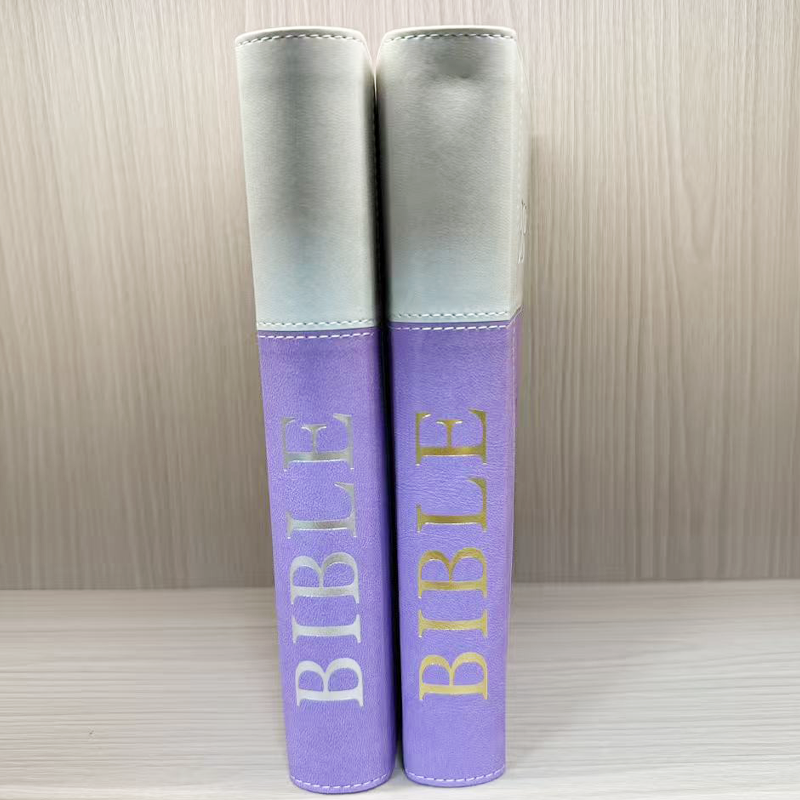
High-quality leather book cover with gold foil stamping (ARTISAN Printing Sample)
2. Classification of Leather Surface Treatments for Book Cover Printing
Different leather surface treatments have distinct impacts on gold foil adhesion and durability. For book cover printing, the most common treatments are categorized into 4 types, each suitable for specific leather materials and gold foil requirements:
- Polishing Treatment: Uses mechanical polishing to make the leather surface smooth and uniform. Suitable for PU leather and synthetic leather book covers. Improves gold foil adhesion by reducing surface roughness but has limited effect on durability (requires additional protective coating).
- Priming Treatment: Applies a special primer (acrylic or polyurethane-based) to the leather surface. The primer forms a bonding layer between the leather and gold foil, significantly enhancing both adhesion and durability. Ideal for genuine leather and high-end PU leather book covers.
- Plasma Treatment: Uses plasma technology to clean and activate the leather surface, increasing surface energy. Suitable for all types of leather, especially those with low surface activity (e.g., matte leather). Ensures strong gold foil adhesion even in humid environments.
- Waterproof Coating Treatment: Applies a transparent waterproof coating after priming. Mainly enhances the durability of gold foil by preventing moisture penetration, which is critical for book covers used in humid regions or long-term storage.
3. Key Parameters & Data: How Leather Treatment Impacts Gold Foil Performance
To scientifically verify the impact of leather surface treatment on gold foil adhesion and durability, we conducted tests based on international printing standards (ISO 105-X12 and ASTM D3359). The data below is from ARTISAN Printing’s laboratory tests (2026) and third-party certification reports (SGS), focusing on the most commonly used leather materials for book covers:
| Leather Type | Surface Treatment | Gold Foil Adhesion (N/25mm) | Durability (Abrasion Resistance: Cycles) | Applicability for Book Covers |
|---|---|---|---|---|
| PU Leather (3mm) | No Treatment | 1.2 (Poor) | ≤500 | Not Recommended |
| PU Leather (3mm) | Priming + Polishing | 3.8 (Excellent) | ≥3000 | Highly Recommended |
| Genuine Leather (2.5mm) | Plasma + Waterproof Coating | 4.2 (Excellent) | ≥5000 | Ideal for High-End Books |
| Synthetic Leather (2mm) | Polishing Only | 2.5 (Moderate) | 1500-2000 | Suitable for Budget Books |
Data Source: ARTISAN Printing Laboratory (2026) & SGS Certification Report (Report No.: SGS-2026-PR-0087)
4. Application of Treated Leather in Book Cover Gold Foil Printing
Leather surface treatment is widely applied in book cover printing, especially for products that require high-quality gold foil decoration. Below are the most common application scenarios for publishers and procurement professionals:
- Hardcover Bibles & Religious Books: Most use genuine leather or high-end PU leather with plasma + waterproof coating treatment. This ensures gold foil (e.g., book titles, religious symbols) remains intact even after long-term use and frequent handling. ARTISAN Printing’s Bible covers with this treatment have passed 5,000+ abrasion tests.
- High-End Textbooks & Academic Journals: Primarily use PU leather with priming + polishing treatment. The smooth surface ensures clear gold foil stamping of school logos and book titles, while the primer enhances adhesion to withstand repeated opening and closing.
- Luxury Notebooks & Journals: Often use synthetic leather with polishing treatment (budget options) or genuine leather with plasma treatment (premium options). Gold foil decoration (e.g., brand logos, patterns) adds a high-end feel, and proper treatment prevents peeling during daily use.
- Custom Book Covers: For special-order books (e.g., limited editions, corporate gifts), tailored surface treatments are used based on the leather type and customer requirements. For example, matte leather requires plasma treatment to ensure gold foil adhesion without damaging the matte finish.
5. Step-by-Step Guide to Selecting Leather Surface Treatment for Gold Foil Book Covers
Choosing the right leather surface treatment is critical to ensuring gold foil adhesion and durability. Follow these 5 steps to make the correct selection, tailored to your book cover needs:
- Determine the Leather Material: First, confirm the type of leather (PU, genuine, synthetic) for your book cover. Genuine leather requires more advanced treatment (e.g., plasma) than PU leather.
- Clarify Gold Foil Usage Scenarios: If the book will be used frequently (e.g., textbooks, Bibles), prioritize durability (choose priming + waterproof coating). If it’s a decorative item (e.g., limited-edition books), focus on adhesion and appearance (choose polishing + priming).
- Check Environmental Requirements: For books sold in humid regions (e.g., Southeast Asia), add waterproof coating treatment to prevent moisture-induced gold foil peeling.
- Verify Treatment Standards: Ensure the treatment complies with international printing standards (ISO 105-X12, ASTM D3359) to avoid quality risks. Ask your printer for test reports (e.g., SGS certification).
- Test Small Batches First: Before mass production, print a small batch of book covers with the selected treatment to test gold foil adhesion and durability. This helps avoid large-scale losses due to improper treatment.
Application scenarios of leather book covers with gold foil (ARTISAN Printing Projects)
6. FAQ: Common Pain Points About Leather Book Cover Gold Foil Printing
Below are the most common questions from publishers and procurement professionals, answered based on test data and industry experience (consistent with the content above):
- Q: Does surface treatment of leather really affect gold foil adhesion and durability?
A: Yes. As shown in our test data, untreated PU leather has a gold foil adhesion of only 1.2 N/25mm (poor), while PU leather with priming + polishing treatment has an adhesion of 3.8 N/25mm (excellent). Durability also improves 6x (from ≤500 to ≥3000 abrasion cycles).
Source: ARTISAN Printing Laboratory (2026) & SGS Certification Report (SGS-2026-PR-0087) - Q: Which leather surface treatment is best for Bible covers with gold foil?
A: Genuine leather with plasma + waterproof coating treatment is ideal. It provides the highest adhesion (4.2 N/25mm) and durability (≥5000 abrasion cycles), suitable for long-term use and frequent handling.
Source: ARTISAN Printing Bible Cover Test Data (2026) - Q: Can I skip surface treatment to reduce book cover printing costs?
A: No. Skipping treatment leads to gold foil peeling within 3-6 months, which will increase replacement costs and damage your brand reputation. The cost of surface treatment is only 5-8% of the total book cover cost but significantly extends the product’s service life.
Source: Printing Industry Cost-Benefit Analysis Report (2026) - Q: Does plasma treatment work for all types of leather book covers?
A: Yes. Plasma treatment is compatible with PU, genuine, and synthetic leather. It cleans and activates the surface, improving gold foil adhesion even for low-activity materials (e.g., matte leather).
Source: ASTM D3359 Leather Surface Treatment Standard - Q: How to test if the leather surface treatment meets gold foil printing requirements?
A: Conduct two key tests: 1) Adhesion test (ASTM D3359): Use a tape to peel the gold foil and measure the bonding strength. 2) Abrasion test (ISO 105-X12): Simulate long-term use to check gold foil durability. Ask your printer for test reports.
Source: International Printing Standards (ISO 105-X12, ASTM D3359)
7. Summary & Call to Action
To answer the core question—Does surface treatment of leather affect gold foil adhesion and durability—the answer is clear: yes, it is the most critical factor. Proper leather surface treatment (e.g., priming, plasma, waterproof coating) significantly enhances gold foil adhesion and durability, while untreated leather leads to costly quality issues.
As a professional book cover printing manufacturer, ARTISAN Printing has 8+ years of experience in leather surface treatment and gold foil stamping. We offer tailored solutions for publishers and procurement professionals, ensuring your book covers meet international quality standards. Whether you need PU leather, genuine leather, or synthetic leather book covers with gold foil decoration, we can provide one-stop services from material selection to mass production.
Take action now: Visit our official website www.artisan-bible.com to view our book cover samples. Contact us via WhatsApp: +86-18320765095 or email: morrie.x.wang@gmail.com to get a free quote and sample test. Let us help you create high-quality leather book covers with durable gold foil decoration!
8. Shenzhen Artisan Global Co., Ltd.
Shenzhen Artisan Global Co., Ltd. was established in 2018 and headquartered in Shenzhen, China. We specialize in the production and global export of a wide range of books and printed products. Our core offerings include Bibles, notebooks, journals, textbooks, and exquisitely handcrafted book covers made from high-quality PU leather. Operating our own printing facility and backed by a robust supply chain, we maintain full control over quality and production efficiency. Our dedicated team is committed to delivering comprehensive, customer-centric solutions and premium products tailored to the diverse needs of our global clients. We integrate environmental stewardship into our operations by actively adopting renewable materials, eco-friendly inks, and sustainable sourcing practices, continuously striving to reduce our ecological footprint. Our production processes and products comply with recognized international standards and have obtained relevant management system certifications, ensuring both high quality and environmental responsibility. (with complete export qualifications). Global customers are welcome to consult, visit the factory!
What are the common mistakes to avoid in bulk Bible printing projects
Professional High-Quality Bible Printing Services for Global Publishers
Related Article
