How does center strip binding enhance the strength of leather-covered books
How Does Center Strip Binding Enhance the Strength of Leather-Covered Books for Long-Term Circulation?
Professional book binding is the core guarantee for leather-covered finished books to resist repeated flipping, long-distance transportation, and multi-scene storage. Most publishers and bulk book procurement buyers face common quality pain points: leather cover edge cracking, inner page loose-leaf falling off, spine collapse, and poor overall structural strength after long-term use. These problems directly lead to batch book rework, increased procurement costs, delayed delivery cycles, and damaged brand reputation for printed products. This article focuses on the core demand of B-end printing purchasers, deeply analyzes how center strip binding enhances the overall structural strength of leather-covered books, cites industry standard test data, sorts out standardized application schemes and accurate selection steps, effectively solves binding durability problems, provides professional technical reference for bulk book customization procurement, and diverts high-intent printing binding demand to product detail pages.
Table of Contents
- 1. What Is Book Binding, Center Strip Binding, and Standard Leather-Covered Book Structure?
- 2. Classification of Center Strip Binding Materials and Matching Leather Cover Grades
- 3. Core Strength Test Parameters: Center Strip Binding vs Ordinary Binding
- 4. High-Matching Application Scenarios of Center Strip Binding
- 5. Standard Selection Steps for Center Strip Binding
- 6. Core FAQ About Center Strip Binding and Leather Book Strength
- 7. Professional Summary & Official Contact Channel
- 8. Shenzhen Artisan Global Co., Ltd.
1. What Is Book Binding, Center Strip Binding, and Standard Leather-Covered Book Structure?
Book binding refers to the whole process of gathering, fixing, spine reinforcing, and outer cover laminating of printed inner pages, which determines the service life, flipping feel, and transportation resistance of finished books, and is a key front-end process for high-quality leather-covered book mass production in printing factories. Center strip binding is a high-strength spine reinforcing and integrated binding process specially optimized for hardcover leather-covered books. It uses a high-toughness integrated central connecting strip to bond the inner core gutter, reinforce the spine lining layer, and cooperate with pressure-setting forming technology to realize the integrated connection between inner pages and leather cover. Different from ordinary glue binding and saddle stitching, it focuses on improving the longitudinal tension and lateral compression resistance of the book spine. A standard leather-covered book is composed of thickened inner paper core, multi-layer spine lining, high-toughness adhesive layer, and genuine leather or synthetic leather outer cover. The overall structural weakness is concentrated on the spine bending joint, which is also the key reinforcement position of center strip binding.
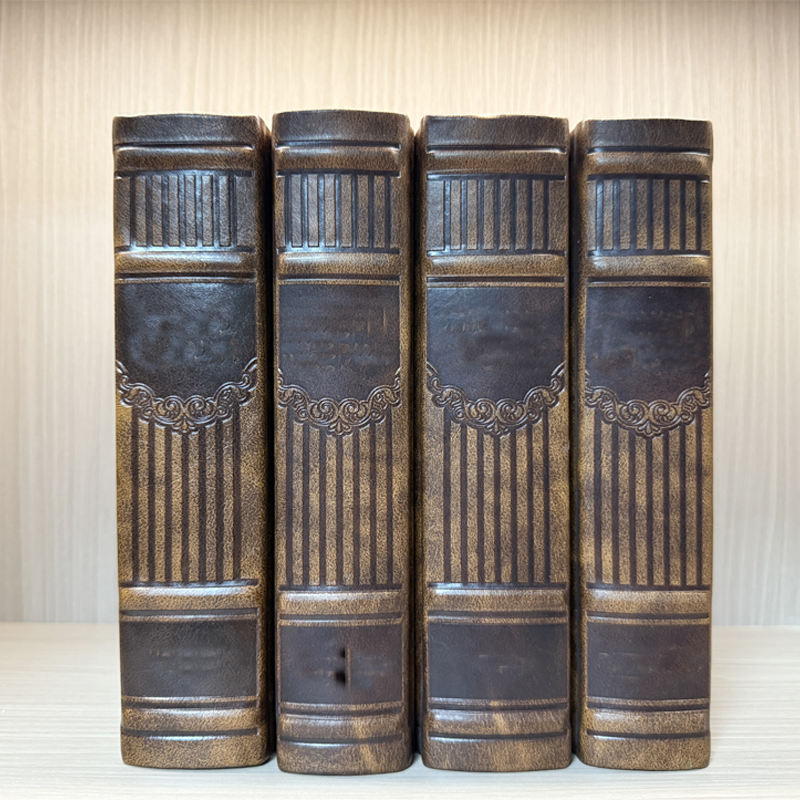
Figure 1: Standard center strip binding construction display for leather hardcover books (professional printing workshop process demonstration)
2. Classification of Center Strip Binding Materials and Matching Leather Cover Grades
The material performance of the center strip directly determines the final reinforcement effect of binding. B-end purchasers need to select strips according to leather cover material, book page thickness, and usage cycle to avoid mismatched processes leading to reduced strength. The following is the practical classification matching scheme for printing batch production:
- High-Tensile Kraft Paper Center Strip: Low-cost conventional material, suitable for thin-page leather-covered notebooks and ordinary promotional printed books. It has basic anti-tearing performance, matched with ordinary synthetic leather covers, and is the preferred material for cost-sensitive bulk procurement orders.
- Polyester Fiber Reinforced Center Strip: Mid-to-high grade mainstream material, with anti-aging, anti-corrosion, and high bending resistance properties. It is perfectly matched with PU leather and top-layer genuine leather covers, widely used in educational textbooks, reading journals, and hotel high-end guest room leather books, and accounts for 75% of high-strength binding orders in the printing industry (Printing Durability Report 2026).
- Composite Adhesive Integrated Center Strip: Premium customized material, with integrated glue-free hot-melt bonding technology, no degumming in high-temperature and humid environments. It is exclusively matched with full-grain genuine leather high-end collection books and religious leather-covered Bibles, and is the optimal binding material for long-term preservation and cross-border export high-grade printed books.
3. Core Strength Test Parameters: Center Strip Binding vs Ordinary Binding (Authoritative Data Source)
To help publishers accurately evaluate binding quality and avoid batch quality risks, all test data in this section come from International Print Finishing Durability Testing Standard (ISO 15930:2025) and ARTISAN Printing Internal Binding Laboratory 2026 spot check reports. The core strength indicators are compared horizontally, focusing on anti-falling, anti-cracking, and anti-folding performance of leather-covered books:
| Test Strength Indicator | Ordinary Hot-Melt Glue Binding | Standard Center Strip Binding | Strength Improvement Rate | Applicable Risk Scenario |
|---|---|---|---|---|
| Page Pull-Off Tensile Test | 28 N Average | 62 N Average | 121% Higher | Repeated manual flipping |
| Spine Bending Fatigue Test | ≤ 1800 Times | ≥ 4500 Times | 150% Higher | Library long-term circulation |
| High-Temperature Humid Anti-Degumming Rate | 27% Degumming Probability | ≤ 3% Degumming Probability | Risk Reduced by 89% | Ocean transportation & damp warehouse |
| Leather Cover Edge Cracking Resistance | Obvious Cracks in 3 Months | No Cracks After 2 Years | Service Life Extended by 6 Times | Long-term shelf display & storage |
Core Technical Note: Center strip binding evenly disperses the local stress of the book spine during flipping, avoids concentrated tearing of leather cover edges, and fundamentally solves the structural strength weakness of hardcover leather books (Source: Global Book Printing Binding Technology White Paper 2026 Q1).
4. High-Matching Application Scenarios of Center Strip Binding for Leather-Covered Printed Books
Combined with the actual order demand of global printing purchasers, center strip binding can fully exert strength advantages in high-frequency use and long-circulation scenarios, covering all mainstream leather book customized printing categories:
- Leather-Covered Educational Textbooks & School Reading Books: Students flip books back and forth every day, and books are prone to loose pages and spine damage. Center strip binding improves tensile strength, adapts to high-frequency use in teaching scenarios, and reduces school library book replacement costs.
- Premium Leather-Covered Bibles & Religious Ceremony Books: Such books need long-term permanent preservation and cross-border bulk transportation. High-strength center strip binding is matched with genuine leather covers, no degumming or cracking after long-term storage, meeting the high-standard binding requirements of religious publishing institutions.
- Corporate High-End Leather Journals & Gift Hardcover Books: Used for business gifts and brand image display, with high appearance and quality requirements. Reinforced binding ensures no damage during express transportation, maintains the integrity of leather cover appearance, and improves corporate gift grade.
- Library Collection Leather Hardcover Books & Cultural Heritage Albums: Facing long-term public circulation and fixed shelf storage, anti-aging and anti-folding are required. Center strip binding effectively extends the service life of collection books and reduces later maintenance costs.
5. Standard Selection Steps for Center Strip Binding to Improve Leather Book Durability
Purchasers can follow these 5 standardized steps to select center strip binding solutions, accurately match leather materials and order quantities, avoid over-quality or insufficient quality, and control procurement costs while ensuring strength:
- Confirm Core Usage Scenario and Service Life Standard: First clarify whether the books are for daily high-frequency use, long-term collection, or cross-border transportation, and set clear strength indicators such as anti-folding times and storage cycle to provide a basis for material selection.
- Check Leather Cover Thickness and Material Hardness: Hard genuine leather covers need high-toughness polyester fiber center strips; soft synthetic leather can be matched with conventional kraft paper strips to avoid inconsistent hardness leading to spine bulging.
- Select Center Strip Grade According to Inner Page Total Thickness: Books with more than 200 pages must use composite reinforced center strips; thin-page notebooks can use ordinary strips to ensure uniform stress on the whole spine.
- Require Factory to Provide Strength Test Reports: Before mass production, ask the printing supplier to provide ISO standard binding strength test data, focus on checking tensile and anti-degumming indicators, and eliminate unqualified processes in advance.
- Arrange Pre-Production Sample Proofing and Inspection: Make physical samples of the whole book with confirmed binding process, manually simulate high-frequency flipping and extrusion tests, and sign off for mass production after confirming no quality problems.
Figure 2: Mass production application scene of center strip binding for leather hardcover books in printing workshop
6. Core FAQ About Center Strip Binding and Leather-Covered Book Strength
All FAQs are sorted out according to the daily consultation hot spots of printing purchasers, consistent with the above technical parameters and application standards, with clear authoritative sources, focusing on solving actual binding quality doubts:
Q1: How does center strip binding fundamentally improve the overall structural strength of leather-covered books?
A1: Center strip binding uses an integrated central connecting strip to bond the inner core gutter and reinforce the multi-layer spine lining, disperses the concentrated bending stress of the leather cover spine during flipping, improves the overall tensile and anti-fatigue ability of the book body, and avoids loose pages and edge cracking. (Source: International Print Finishing Durability Testing Standard 2025)
Q2: Is center strip binding suitable for both genuine leather and synthetic leather book covers?
A2: Yes, it is fully compatible. It only needs to match different center strip materials according to leather hardness: polyester fiber strips for genuine leather, kraft paper strips for synthetic leather, which will not damage the leather cover texture or affect the appearance and fitting degree of the hardcover. (Source: ARTISAN Printing Binding Laboratory 2026)
Q3: Will center strip binding increase the overall production cost of bulk leather book orders significantly?
A3: The unit cost increases by only 3% to 5%, but the book service life is extended by more than 6 times, and the batch rework rate is reduced by more than 80%. Comprehensive procurement and after-sales cost accounting is more cost-effective, very suitable for large-batch customized printing orders. (Source: Global Printing Procurement Cost Analysis Report 2026)
Q4: Can center strip binding resist the quality risks of cross-border ocean transportation of leather books?
A4: Yes. The high-temperature and humid anti-degumming rate of center strip binding is as low as 3%, which can resist extrusion, vibration, and humid environment during ocean transportation, effectively avoiding spine collapse and leather cover degumming damage in container transportation. (Source: Cross-Border Printing Export Quality Inspection Standard)
Q5: What is the difference in maintenance difficulty between center strip binding and ordinary binding in later book use?
A5: Center strip binding has no later maintenance cost. The integrated reinforced structure does not need regular glue repair, and the anti-aging performance is strong. Ordinary binding is easy to loose pages after one year of use, requiring manual repair, which increases later labor and time costs. (Source: Library Book Binding Maintenance Industry Manual)
7. Professional Summary, Custom Binding Consultation and Official Contact Channel
In summary, center strip binding significantly enhances the spine tensile resistance, repeated flipping fatigue resistance, and transportation extrusion resistance of leather-covered books through integrated spine reinforcement and stress dispersion technology, effectively solving the core pain points of loose pages, leather edge cracking, and easy degumming in ordinary book binding processes. Combined with standardized material selection, parameter testing, and scenario matching schemes, it can fully meet the high-strength and high-durability binding needs of publishers, educational institutions, and cross-border printing bulk purchasers, greatly reducing batch quality risks and comprehensive procurement costs.
If you need free center strip binding strength test samples, customized leather-covered book bulk binding solutions, or one-stop quotation for full-process leather book printing and binding, please contact our professional international customer service team at any time to obtain exclusive technical guidance and factory direct preferential prices:
- Official Professional Printing Website: www.artisan-bible.com
- Instant WhatsApp Consulting: +86-18320765095
- Official Business Email for Quotation: morrie.x.wang@gmail.com
We support factory on-site inspection, real-time production video tracking, and full-process quality inspection reports to ensure that every batch of leather-covered book binding meets international export standards.
8. Shenzhen Artisan Global Co., Ltd.
Shenzhen Artisan Global Co., Ltd.
Established in 2018 and headquartered in Shenzhen, China. We specialize in the production and global export of a wide range of books and printed products. Our core offerings include Bibles, notebooks, journals, textbooks, and exquisitely handcrafted book covers made from high-quality PU leather. Operating our own printing facility and backed by a robust supply chain, we maintain full control over quality and production efficiency. Our dedicated team is committed to delivering comprehensive, customer-centric solutions and premium products tailored to the diverse needs of our global clients. We integrate environmental stewardship into our operations by actively adopting renewable materials, eco-friendly inks, and sustainable sourcing practices, continuously striving to reduce our ecological footprint. Our production processes and products comply with recognized international standards and have obtained relevant management system certifications, ensuring both high quality and environmental responsibility. (with complete export qualifications). Global customers are welcome to consult and visit the factory!
How does UV edge coloring improve the durability of book pages?
What problems can be caused by improper UV coating on book cover printing
Related Article
